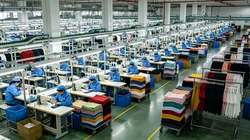
China produces over 65% of the world's clothing, yet finding the best city to source baby clothes from china is not a simple question with one answer. Guangzhou, Zhili, Yiwu, Shenzhen, Dongguan, and Hangzhou each operate like separate economies when it comes to pricing, minimum order quantities (MOQs), quality tiers, and export logistics. Choose the wrong city for your business model, and you can easily overpay by 25% or get stuck with a trading company posing as a manufacturer. Whether you are new to sourcing products from china or refining an existing supply chain, city selection determines your margins. In this guide, I will break down each city's strengths, pricing, and ideal buyer profile—based on 10+ years of firsthand sourcing experience across Guangdong and Zhejiang.
By the end, you will know which city fits your order size, what certifications to demand, and when a sourcing agent pays for itself.
Why "Best City" Depends on Your Business Model
China's baby clothes industry is not one centralized market. It is split into distinct regional ecosystems, each evolved over decades to serve a different type of buyer. Understanding this is the difference between a smooth, profitable sourcing run and an expensive mistake.
Here is how the map breaks down by buyer type:
Amazon FBA / Shopify sellers need low MOQ, fast turnaround, and label-ready packaging. They usually match best with Dongguan or Yiwu.
Boutique / private-label brands need design flexibility, premium fabrics, and reliable certifications. Shenzhen and Guangzhou are their strongest options.
Bulk distributors / wholesalers need rock-bottom factory direct pricing and massive volume capacity. Zhili is purpose-built for this.
Eco-conscious / organic brands need GOTS-certified supply chains and full CPSIA or EN71 documentation. Shenzhen leads here.
The hidden cost of choosing wrong is real. Source from Guangzhou when you need Zhili-level pricing, and your unit cost jumps 15–25%. Source from Zhili when you need Shenzhen-level compliance, and you risk customs holds. Visit Yiwu for organic bamboo fiber babywear, and the supplier pool is shallow.
The next section gives you the answer at a glance. The sections after that explain exactly why.
Quick Decision Table: Which City Is Right for You?
Your Goal | Best City | Why | Typical MOQ | Price Range (USD) |
|---|---|---|---|---|
Broad variety + visit wholesale markets | Guangzhou | Deepest supplier pool, best export logistics | 100–500 pcs | $2.80–$5.80 |
Absolute lowest factory price / high volume | Zhili (Huzhou) | Two-thirds of China's kidswear production; pure factory density | 200–500 pcs | $2.50–$4.50 |
Small MOQs / test new designs | Yiwu or Guangzhou | Agile small-batch production; tail goods available | 30–100 pcs | $2.50–$4.00 |
Organic / premium / safety-critical | Shenzhen or Guangzhou | Strongest certification infrastructure; CPSIA/GOTS expertise | 100–300 pcs | $3.20–$6.00 |
Fast-fashion trends / boutique quality | Hangzhou | Design-driven styles; broader quality range | 100–200 pcs | $3.50–$6.50 |
Startups needing design / tech pack help | Dongguan | Low-MOQ factories with full OEM/ODM support | 50–200 pcs | $3.00–$5.50 |
There is no single "best" city—only the best city for your order profile. If you are unsure where you fit, read on.
Guangzhou: The Wholesale Market Capital
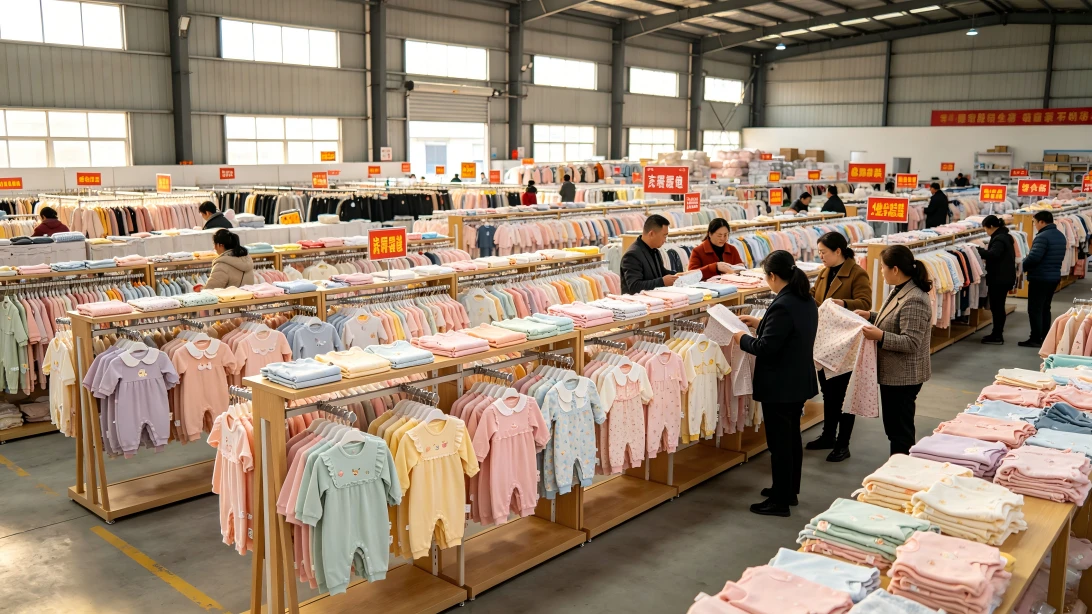
Guangzhou accounts for over 35% of China's kids' apparel production. No other city offers the same density of wholesale markets, export-forward suppliers, and direct port access. If you plan to visit China and walk showroom floors, Guangzhou is where you start.
Key Wholesale Markets on Zhongshan 8th Road
The Zhongshan 8th Road district in Liwan District is the largest concentration of children's and maternal product markets in South China. Here are the ones that matter:
Zhong Ba Children's Garment Plaza — 60,000 m², 12 floors, mid-to-high-end baby and maternal products. Metro: Line 5, Zhongshanba Station, Exit A.
Fuli Children's World — 20,000+ m², ~500 shops, upscale children's wear plus cribs, strollers, and shoes. Metro: Line 1, Chen Clan Academy Station, Exit A.
Nantian Children's Clothing Wholesale Square — Hundreds of thousands of new styles annually; hosts brands like Frog Prince. Connected buildings with sky bridges.
Zhuorong Foreign Trade Wholesale City — Nearly 500 merchants; diverse styles, favorable prices, and high-quality alternatives.
Litang Building — ~20,000 m², 1,000+ merchants. Full range of children's clothing, infant products, shoes, and toys.
Liuhua Fashion Wholesale Market near Guangzhou Railway Station Metro adds 2,000+ suppliers strong in baby bodysuits (0–24 months) and sleepwear. Guoda Children's World contributes another 31,000+ m² of warehousing and children's clothing.
Pricing starts at 15–25 RMB ($2.00–$3.50) for infant pajamas and bodysuits. MOQ is typically 100–500 pieces, though some vendors accept smaller trial lots in person. Guangzhou's direct access to Guangzhou Port and Nansha Port offers the fastest export clearance for bulk shipments.
SinoSourceAgent Insight: On our last Guangzhou visit in early 2026, we identified three new Zhongshan 8th Road suppliers for a US client. Cutting out their middleman reduced sampling from four weeks to ten days and lowered landed costs by 18%.
Zhili (Huzhou, Zhejiang): The Children's Wear Production Capital
If Guangzhou is the showroom, Zhili is the factory floor. This single town in Huzhou City, Zhejiang Province, produces roughly two-thirds of all kidswear in China. The numbers are staggering:
14,000+ children's clothing companies
6,000+ production enterprises
65,000+ high-speed sewing machines
70,000+ workers
Annual output exceeding 1.45 billion pieces
Exports to 153+ countries
The China Zhili International Children's Wear Market covers roughly 700,000 m². Beneath the tourism rating lies a hardcore production zone.
What Zhili Does Best
Zhili specializes in low-to-mid-range children's apparel at prices that are hard to beat. Factory-direct pricing for basic rompers runs $2.50–$4.00 per piece, with MOQ at 200–500 pieces. The town has a complete supply chain under one roof: fabric, embroidery, printing, and accessories within a 15-minute drive.
The Zhili Challenge
Zhili is not beginner-friendly. The sourcing communication challenges are greater than in Guangzhou, with fewer English-speaking staff and more trading companies posing as factories. Quality control consistency varies widely.
SinoSourceAgent Insight: We always conduct a live WeChat video walkthrough before recommending a Zhili factory. In 2025, we caught two "manufacturers" that were three-room trading offices with no sewing equipment—saving our client from a $15,000 mistake.
If you need the lowest unit cost at 500+ pieces, Zhili is unbeatable. Just verify what is behind the showroom door.
Yiwu: The Small-MOQ Capital for Startups
Yiwu extends its small-commodity agility into baby clothes. For startups, Shopify sellers testing demand, or Etsy owners needing seasonal restocks, a dropshipping sourcing agent can leverage Yiwu as a useful safety net.
Strengths
Low MOQs: Some suppliers accept 30–50 pieces per style.
Fast turnaround: Stock items ship within 7–10 days.
Accessory bundling: Hats, socks, bibs, and headbands are everywhere.
Limitations
Yiwu is trading-oriented, not manufacturing-deep. Far fewer actual cut-and-sew factories exist here than in Zhili or Dongguan. The GOTS-certified supplier pool is thin, and complex custom designs are difficult.
Pricing runs $2.50–$4.00 for basics. Use Yiwu for market testing; move to Zhili or Guangzhou once you validate demand.
Shenzhen: The Premium and Organic Compliance Hub
Shenzhen is the safest choice for US and EU buyers, especially if your brand promise includes organic materials or chemical-free fabrics.
Compliance Strengths
CPSIA compliance for US-bound baby clothes.
EN71 / CE mark documentation for EU market entry.
GOTS certification for organic cotton and bamboo lines.
OEKO-TEX Standard 100 for chemical safety.
SGS and Intertek labs maintain offices here for fast turnaround.
Product Edge
Shenzhen suppliers experiment with tech-integrated babywear—moisture-wicking fabrics and temperature-regulating materials. Organic rompers run $3.20–$6.00+ per piece, with MOQs around 100–300 pieces.
For basic cotton bodysuits, Shenzhen charges 20–40% more than Zhili. But for organic or premium brands, that premium buys documentation that protects against recalls.
Dongguan: The Startup-Friendly Factory Base
Dongguan is our home base, and for good reason. This manufacturing hub offers some of the lowest legitimate factory MOQs in China, combined with full-service OEM/ODM support that includes tech packs, pattern making, and sample development. Address protecting intellectual property China before you share designs with any factory.
Why Dongguan Works for New Brands
New brands rarely launch with 500-piece orders. Dongguan's ecosystem supports 50-piece photo runs and 100-piece pre-sale tests, with factories patient enough to revise samples multiple times. Pricing falls in the $3.00–$5.50 range, and MOQs start as low as 50–100 pieces.
Notable factories include Hongyu Apparel and Alamby Fashion, both of which help startups build tech packs from scratch.
The SinoSourceAgent Advantage
Headquartered in Dongguan with 10+ years of local relationships, we maintain a deep network of vetted low-MOQ factories. Our China product quality control process includes independent inspectors who deliver reports directly to you. If you need factory access and honest QC, Dongguan is the logical starting point.
Hangzhou: The Trend and Design Capital
Hangzhou's Sijiqing Clothing Market is better known for women's fashion, but its children's apparel sector has grown rapidly in design-driven, boutique-quality pieces.
Strengths
Trend-forward styles with frequent seasonal updates.
Broader quality range than Zhili, spanning budget to premium.
Strong in girls' dresses, boutique sets, and seasonal fashion.
Pricing runs $3.50–$6.50 per piece, with MOQs at 100–200 pieces. The limitation is logistics: Hangzhou lacks Guangzhou's export infrastructure, so buyers often source designs here and ship through Guangzhou. Whoever manages the port clearance will handle the Bill of Lading (B/L) and customs declaration paperwork.
Side-by-Side City Comparison Matrix
Best City to Source Baby Clothes From China (2026) GuangzhouMediumMOQ100–500 pcsLead Time15–25 daysBest ForAll categories & markets Zhili (Huzhou)LowestMOQ200–500 pcsLead Time20–35 daysBest ForVolume basics, fashion YiwuLowMOQ30–100 pcsLead Time7–14 daysBest ForBasics & accessories ShenzhenHighMOQ100–300 pcsLead Time20–30 daysBest ForOrganic & premium DongguanMediumMOQ50–200 pcsLead Time15–25 daysBest ForCustom OEM/ODM HangzhouMedium-HighMOQ100–200 pcsLead Time15–25 daysBest ForTrendy & boutique
Use this table to match your budget, volume, and quality needs to the right city:
City | Price Tier | Typical MOQ | Lead Time | Best Product Types | Certification Access | Logistics Ease |
|---|---|---|---|---|---|---|
Guangzhou | Medium | 100–500 pcs | 15–25 days | All categories | Good | Excellent |
Zhili | Lowest | 200–500 pcs | 20–35 days | Volume basics, fashion | Limited | Moderate |
Yiwu | Low | 30–100 pcs | 7–14 days (stock) | Basics, accessories | Limited | Good |
Shenzhen | High | 100–300 pcs | 20–30 days | Organic, premium, smart wear | Excellent | Good |
Dongguan | Medium | 50–200 pcs | 15–25 days | Custom OEM/ODM | Good | Good |
Hangzhou | Medium-High | 100–200 pcs | 15–25 days | Trendy, boutique, dresses | Moderate | Moderate |
If you span multiple columns, use a multi-city strategy: develop designs in Hangzhou, produce bulk in Zhili, and handle FOB export logistics through Guangzhou.
Compliance and Safety by City
Baby skin is significantly more permeable than adult skin. Dyes, formaldehyde, and phthalates in non-compliant fabrics can cause allergic reactions, rashes, or worse. Regulations are strict, and they are getting stricter every year. Here is how each city stacks up on safety infrastructure.
China's Own Baseline: GB 31701-2015
GB 31701-2015 is China's infant textile safety standard. Any factory claiming baby clothes expertise should be able to produce compliance reports against this standard immediately. If they hesitate, that is a red flag.
City-by-City Compliance Strengths
City | Compliance Rating | Why |
|---|---|---|
Shenzhen | Excellent | Dense cluster of certified organic manufacturers; SGS and Intertek labs nearby; deepest experience with CPSIA and EN71 documentation. |
Guangzhou | Good | Many export-oriented suppliers have CPSIA/EN71 experience, but verification is still required on a per-factory basis. |
Dongguan | Good | Growing certified factory base; we regularly conduct factory audit visits for GOTS and OEKO-TEX compliance. |
Zhili | Variable | Many factories focus on the domestic market (GB 31701-2015 only). Export certifications exist but must be verified rigorously. |
Yiwu | Weak | Most suppliers trade stock goods without export safety documentation. Not recommended for certified organic lines. |
Hangzhou | Moderate | Stronger for adult fashion compliance; baby-specific certification infrastructure is less developed. |
Red flag: If a supplier says, "We can get the certificate after you order," walk away. Legitimate factories already have test reports. Whenever possible, book a third-party inspection with SGS or Intertek before shipment rather than trusting factory self-reported data.
Sourcing for Amazon FBA: Which City Should You Choose?
Amazon FBA sellers have needs that go beyond standard wholesale buying. Working with an Amazon FBA sourcing agent simplifies labeling, bundling, and compliance. You need polybag and suffocation warning labeling, carton weight and dimension compliance, FNSKU or UPC labeling, and consistent quality to avoid negative reviews.
Best Cities for FBA Baby Clothes
Guangzhou is the best overall choice. Suppliers here have extensive FBA prep experience, and the city's logistics network offers direct routes to Yantian and Shekou ports.
Dongguan is excellent for FBA startups. Low MOQ plus design support means you can test SKUs without committing to massive volume. Our team handles FBA prep—labeling, bundling, and carton compliance checks—as part of our end-to-end service.
Shenzhen is ideal for premium or organic FBA brands that need full certification packages shipped directly to Amazon warehouses.
Yiwu works for testing small SKU counts before you scale, but lacks the FBA infrastructure depth of Guangdong.
Questions to Ask Your Supplier
Do you have experience with Amazon FBA prep?
Can you apply FNSKU labels and suffocation warnings?
What is your defect rate on the last 10,000 units produced?
Do you understand Amazon's carton weight and dimension limits?
If the answer to question one is no, keep looking. FBA mistakes are expensive.
Practical On-the-Ground Sourcing Tips
Here is what actually matters after 10+ years on factory floors and wholesale markets.
Seasonal Buying Calendar
Months | Action | Products to Source |
|---|---|---|
January–March | Order autumn/winter collections | Fleece, wool, jackets, thermal sets |
April–June | Order spring/summer collections | Cotton, linen, swimwear, short sets |
July–August | Buy post-season clearance stock | Surplus inventory at 50–70% off wholesale |
September–December | Book peak-season production | All categories; book early to avoid CNY shutdown |
Seasonal Rhythm Tips
One detail first-time buyers miss: factories begin winding down 3–4 weeks before Chinese New Year and stay at partial capacity for 2–3 weeks after. In early 2025, we watched a client's April delivery slip to late May because they booked production in November but failed to lock fabric before the holiday exodus. If you are targeting Q2 shelf dates, confirm fabric availability by mid-November at the latest.
How to Verify a Real Factory
Trading companies posing as factories are common—especially in Zhili. Avoiding them protects you from the most expensive importing from China mistakes. Our four-step verification:
Request a live WeChat video walkthrough of the sewing floor, cutting room, and packing station.
Ask for the business license. The registered scope should include manufacturing, not just trading.
Request timestamped photos of production equipment. Look for cutting tables, sewing lines, and packing stations.
Ask technical questions only a factory would know. Example: "What GSM is your organic cotton jersey?"
Negotiation Tactics
Open with: "Néng gěi wǒ pīfā jià ma?" (Can you give me the wholesale price?)
Request tiered pricing: 100 / 500 / 1,000 pieces.
Offer a 20–30% deposit to lock pricing for 90 days, and always follow safe payment China supplier practices to reduce fraud risk.
Never accept the first quote. A 10–15% reduction is standard.
Sample Strategy
Never rely on the "golden sample." Order a production counter-sample with your exact fabric, zipper, and snaps before depositing. The golden sample is often sewn in a better workshop; your counter-sample reveals the truth. Once you approve it, lock the specs in a detailed Proforma Invoice (PI) before wiring any deposit.
Hidden Costs
Mold fees for custom hardware.
Packaging upgrades: hang tags, polybags, inserts.
Shipping from factory to port, often excluded from FOB quotes. If your supplier quotes Ex Works (EXW), you also shoulder inland transport and the customs declaration on the Chinese side.
Lab testing fees for third-party certification.
When Should You Use a Sourcing Agent?
DIY sourcing works for small, low-risk orders. Buying $2,000 of stock items on Alibaba with Trade Assurance rarely requires an agent. But some situations make going alone reckless. A sourcing agent typically charges 5–10% of order value; the fee pays for itself when it prevents a single compliance failure or miscommunication that wipes out your margin.
A Sourcing Agent Becomes Essential When:
You are sourcing from Zhili, where the language barrier is high and trading companies disguise themselves as factories. A professional China factory audit is the only way to verify what is behind the showroom door.
You need ongoing factory audit and quality control services for baby clothes—this is not a one-time task.
Your order requires multi-city coordination, such as fabrics from Hangzhou, sewing in Zhili, and FBA prep in Dongguan.
You need CPSIA, GOTS, or EN71 certification verification and third-party lab testing.
You want transparent, end-to-end pricing with no hidden middleman fees.
The SinoSourceAgent Difference
We verify factory credentials before you place a deposit, our bilingual team eliminates miscommunication, and our independent QC team delivers inspection reports directly to you. Quotes break down factory price, service fee, and logistics cost separately. No surprises.
If you are ready to source baby clothes from China without the guesswork, SinoSourceAgent is your on-the-ground partner.
FAQ: Your City-Sourcing Questions Answered
Q1: Guangzhou vs Zhili—which is better?
Guangzhou wins on variety, market visits, and logistics. Zhili wins on absolute factory pricing and volume. Most experienced buyers use both.
Q2: What is the cheapest city?
Zhili (Huzhou) at $2.50–$4.00 per piece for basics. Trade-off: higher MOQ (200–500 pieces) and a steeper learning curve.
Q3: Can I source organic baby clothes from China?
Yes. Shenzhen and Guangdong have the strongest GOTS-certified base. Always demand current test reports from SGS or Intertek—not promises.
Q4: Best city for Amazon FBA baby clothes?
Guangzhou or Dongguan. Both have FBA-prep suppliers and strong port access. Dongguan is better for startups needing low MOQs.
Q5: Do I need to visit China?
Not for small trial orders. For bulk or custom designs, visiting Guangzhou's Zhongshan 8th Road or Zhili's factory cluster dramatically reduces risk.
Q6: What certifications should I demand?
US: CPSIA + ASTM F963.
EU: EN71 + CE mark.
Organic: GOTS.
Chemical safety: OEKO-TEX Standard 100.
China baseline: GB 31701-2015.
Q7: How do I avoid trading companies?
Request a live video tour, check business licenses, and ask technical questions. Without Mandarin skills or time, a sourcing agent with audit capability is your safest investment.
About SinoSourceAgent
SinoSourceAgent is a Dongguan-based sourcing firm with 10+ years of experience helping importers, Amazon sellers, and boutique brands navigate China's manufacturing landscape. We specialize in supplier verification, factory audit, independent quality control, and end-to-end logistics coordination. Every client works directly with a bilingual account manager and receives transparent, itemized quotes with no hidden middleman fees.
Conclusion: Pick Your City, Then Protect Your Investment
Here is the recap:
Guangzhou = variety + wholesale markets + export logistics.
Zhili = volume + lowest factory price + highest production density.
Yiwu = small MOQs + fast testing + low risk for startups.
Shenzhen = compliance + organic/premium + certification infrastructure.
Dongguan = startup-friendly + design support + low MOQ factories.
Hangzhou = trends + boutique fashion + design differentiation.
The "best" city is the one that matches your order size, quality tier, and business model. But even the right city will not protect you from bad suppliers or compliance gaps. Do your verification, demand real certifications, and never skip the production counter-sample. Pricing and lead times quoted in this guide reflect market conditions as of early 2026; actual factory quotes will vary by season, fabric cost, and order complexity. If you want an experienced partner on the ground, SinoSourceAgent handles supplier verification, factory audit, independent quality control, and transparent logistics—so you can focus on building your brand.