Choosing the best cities to source products in China is not about following a generic list you found online. It is about matching your product, order size, and risk tolerance to the right manufacturing ecosystem. Last year, we watched a US furniture importer fly straight to Guangzhou, tour three showrooms, and sign a purchase order for dining sets at prices 18% higher than what buyers were paying 40 minutes away in Foshan. The difference was not quality. It was city selection. At SinoSourceAgent, we have spent over ten years on the ground in Dongguan sourcing products from china for clients worldwide, completing thousands of China factory audit inspections, and building a vetted supplier network that spans every hub on this list. In this guide, you will learn which city matches your product and business model, how to vet suppliers once you get there, what to budget for samples and MOQs, and how to avoid the scams that catch first-time buyers before they even board the plane.
China's Three Manufacturing Belts: Know the Map Before You Pick the City
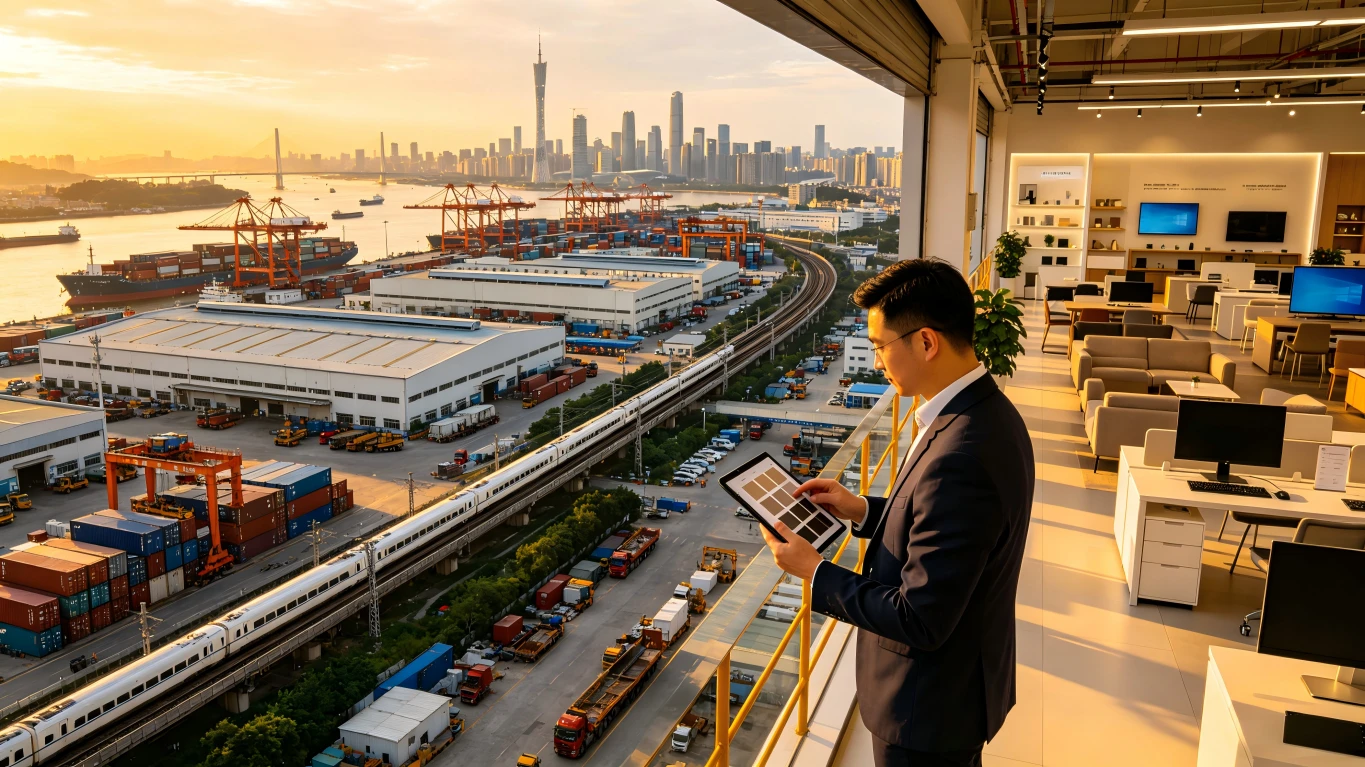
China's factory landscape is not random. It is organized into three dominant belts, and understanding them is the first step to narrowing down your target city. Geography still matters in 2026 because labor costs, port access, and supplier density vary dramatically between regions.
The Pearl River Delta (PRD) — Guangdong Province
The PRD is the world's largest export manufacturing cluster. If you are sourcing electronics, furniture, textiles, toys, or ceramics, this is your starting point. Cities like Shenzhen, Guangzhou, Dongguan, and Foshan sit within a two-hour drive of one another, which makes multi-city sourcing trips efficient. The region benefits from proximity to Hong Kong, Shenzhen Port, and Guangzhou Port, offering the fastest international shipping lanes to North America, Europe, and Southeast Asia.
The Yangtze River Delta (YRD) — Zhejiang, Jiangsu, and Shanghai
The YRD specializes in precision electronics, textiles, small commodities, and e-commerce integrated manufacturing. Ningbo, Hangzhou, Suzhou, and Yiwu dominate here. The Port of Ningbo-Zhoushan and Shanghai Port handle enormous volumes, making this belt ideal for buyers shipping to the US East Coast or Northern Europe. Labor costs are slightly higher than the PRD, but quality consistency and supply chain sophistication are often superior.
The Emerging Inland Belt — Chongqing, Chengdu, Zhengzhou, and Wuhan
These cities are no longer just for heavy industry. Electronics assembly, automotive parts, and machinery are shifting inland for cost savings. Labor here is 10–20% cheaper than on the coast, but lead times are longer because goods must travel by rail or river to reach a seaport. This belt suits high-volume, price-sensitive orders where delivery flexibility exists.
Manufacturing Belt | Product Focus | Avg. Labor Cost vs. Coastal | Port Access | Best For |
|---|---|---|---|---|
Pearl River Delta (PRD) | Electronics, furniture, textiles, toys, ceramics | Baseline (100%) | Excellent — Shenzhen, Guangzhou, Hong Kong | Speed, variety, first-time buyers |
Yangtze River Delta (YRD) | Precision electronics, textiles, small commodities, e-commerce goods | 105–110% of PRD | Excellent — Ningbo, Shanghai | Quality consistency, EU/US East Coast shipping |
Emerging Inland Belt | Automotive, heavy machinery, electronics assembly, basic textiles | 80–90% of PRD | Limited — rail/river to port | High-volume, cost-sensitive, flexible timelines |

Best Cities to Source Electronics and Technology Products
If your product category is electronics, your city choice determines prototyping speed, OEM flexibility, and defect rates. Here are the four cities that matter most in 2026.
Shenzhen — China's Silicon Valley
Shenzhen is unmatched for consumer electronics innovation. The city hosts the world's densest network of electronics suppliers, from smartphone assembly plants to circuit board fabricators. Huaqiangbei Electronics Market and SEG Electronics Market remain the global reference points for sourcing components and small gadgets.
Prototyping typically takes 7–14 days, and OEM/ODM capabilities are everywhere. If you need a custom smartphone accessory or a new IoT device, Shenzhen is where ideas become physical products fastest. Just remember that sharing designs with factories requires protecting intellectual property China through NDAs and design patents before you release files.
Insider warning: Many businesses in Shenzhen are trading companies posing as factories. Always verify who owns the production line before you commit. We have seen buyers pay factory-direct prices for goods that were subcontracted to a workshop three provinces away.
Best for: Tech startups, Amazon FBA sellers, and buyers needing rapid OEM/ODM customization.
Dongguan — The Agile Manufacturing Powerhouse
Dongguan sits between Shenzhen and Guangzhou, yet most buyers treat it as an afterthought. That is a costly mistake. With over 10,000 high-tech factories, Dongguan offers prototyping in 3–5 days, flexible MOQs, and lower overhead than Shenzhen. Chang'an district specializes in precision molds. Houjie handles furniture-compatible electronics and commercial-grade components. Zhangmutou is a plastics and injection molding hub.
This is where SinoSourceAgent is headquartered, and it is where we source daily. The city's factory ecosystem rewards buyers who need speed and customizations without Shenzhen price tags.
Best for: Buyers who need agile manufacturing, smaller trial orders, or custom electronic components.
Suzhou (Kunshan) — Precision and High-End Electronics
Suzhou produces more than half of the world's computers. The city, together with Kunshan next door, is China's capital of semiconductors, display panels, and IT hardware. Quality consistency here is the highest in the country, thanks to decades of foreign direct investment and strict process controls.
Defect rates are low, but MOQs are high and customization timelines are longer. This is not the place to prototype a new gadget. It is the place to manufacture it at scale with near-zero failure rates.
Best for: B2B industrial buyers, medical device companies, and any order where failure is not an option.
Hangzhou — E-Commerce Electronics
Hangzhou is Alibaba's birthplace, and its suppliers natively understand Amazon FBA prep, barcoding, bundling, and e-commerce packaging. If you are a Shopify or Amazon seller looking for smart gadgets or private-label electronics with ready-to-ship packaging, Hangzhou factories speak your language.
Best for: Online-first brands and private-label sellers who need e-commerce-ready fulfillment.
City | MOQ (Custom) | Sample/Prototype Cost | Prototyping Speed | Best Product Type | Risk Level |
|---|---|---|---|---|---|
Shenzhen | 500–1,000 units | $300–$800 | 7–14 days | Consumer electronics, IoT, phone accessories | High (many traders) |
Dongguan | 200–500 units | $200–$600 | 3–5 days | Electronic components, plastic molds, commercial electronics | Medium |
Suzhou | 1,000+ units | $500–$1,500 | 14–30 days | Semiconductors, IT hardware, precision electronics | Low |
Hangzhou | 300–800 units | $250–$700 | 10–18 days | Smart gadgets, e-commerce electronics, private-label goods | Medium |
Best Cities to Source Furniture, Ceramics, and Home Goods
Furniture is not a one-city game. The showroom city and the factory city are often different places, and confusing them costs buyers thousands.
Foshan — The World's Furniture Capital
Foshan is the first name in furniture sourcing. Lecong Furniture City stretches over 5 kilometers of showrooms with 3,800+ vendors. Longjiang is known as "China Furniture Manufacturing Town." Shiwan district handles ceramics and building materials. If you need residential sofas, hotel beds, or cabinets, Foshan has more options than any other city on earth.
Insider warning: Foshan showrooms are designed to impress. The factory making your sofa may be a 30-minute drive away, or it may not belong to the showroom owner at all. Always insist on a factory visit before placing a bulk order. We have seen buyers sign contracts in Lecong only to discover their goods were outsourced to a workshop with no quality system.
Best for: Furniture importers, hotel and hospitality buyers, and home decor brands.
Dongguan — Export-Grade Commercial Furniture
Dongguan's furniture sector does not get the headlines Foshan gets, but it should. The city specializes in office furniture, hotel furniture, contract furniture, and outdoor furniture. Export-oriented factories here maintain structured quality control processes, and pricing is often 10–15% lower than Foshan for commercial-grade goods.
In a recent project, we helped a US office furniture retailer audit four factories across Foshan and Dongguan. The Dongguan facility matched Foshan's quality on every metric but offered pricing that reduced total procurement costs by 23%. The difference was Dongguan's leaner overhead and focus on B2B export efficiency.
Best for: B2B commercial buyers, office fit-out companies, and contract furniture dealers.
Ningbo (Cixi) — Small Home Appliances
Cixi district in Ningbo hosts roughly 10,000 appliance factories producing vacuums, microwaves, dishwashers, heaters, and HVAC units. Combined with the Port of Ningbo-Zhoushan, this is one of China's most export-efficient appliance clusters.
Best for: Appliance brands and buyers focused on heating, cooling, and kitchen products.
City | Product Range | Avg. Price Tier | MOQ | QC Complexity |
|---|---|---|---|---|
Foshan | Residential, hospitality, and commercial furniture; ceramics | Medium-High | 1–3 containers | High (showroom/factory mismatch risk) |
Dongguan | Office, hotel, contract, and outdoor furniture | Medium | 100–500 units | Medium (structured export QC) |
Ningbo (Cixi) | Small home appliances, HVAC, kitchen equipment | Medium | 500–1,000 units | Medium |
Best Cities to Source Textiles, Apparel, and Fashion
Textile sourcing in China requires distinguishing between fabric markets, garment factories, and e-commerce integrated workshops. Unlike electronics or furniture, textiles involve a two-step supply chain: you source the fabric first, then find a cut-and-sew factory. Getting either step wrong means color mismatches, shrinkage issues, or delivery delays that ruin a seasonal collection. Here are the four cities that dominate the textile and apparel landscape in 2026.
Guangzhou — Fast Fashion and Garment Production
Guangzhou's garment industry is massive, fragmented, and fast. You will find everything from fast fashion factories to textile traders in the same district. The city's central location makes logistics easy, but buyer beware: the sheer number of middlemen means prices vary wildly for identical goods.
Insider tip: Guangzhou's Shahe and Baima garment districts are excellent for quick-turnaround orders, but if you need consistent reorder quality, always trace the factory back to its actual production address. Many "factories" in Guangzhou are merely design studios that outsource sewing to rural workshops.
Shaoxing (Keqiao) — Asia's Textile Hub
Keqiao is Asia's largest textile market. If you need custom fabrics — cotton, jersey, lace, velvet, or digital prints — this is where patterns and colors come to life. The market is unbeatable for developing signature apparel lines.
Hangzhou — Silk and E-Commerce Fashion
Hangzhou's Sijiqing Clothing Market is a fashion production powerhouse with thousands of manufacturers under one roof. The city's real advantage is e-commerce integration. Suppliers here understand small-batch production, fast turnaround, and photography-ready packaging for online brands. Because Hangzhou is the birthplace of Alibaba, local factories grew up alongside China's e-commerce explosion. They know what a spec sheet for Amazon or Shein looks like, and they can turn around sample batches in 10–14 days.
Suzhou — Premium Silk and Home Textiles
Suzhou is China's historic silk capital, with production traditions dating back over two millennia. Beyond silk garments, the city produces home textiles, underwear, and freshwater pearls through the Suzhou Pearl and Gem City. If your brand sells premium or heritage-positioned textiles, Suzhou delivers authenticity that other cities cannot replicate. The silk here is not merely a commodity; it is a vertically integrated craft chain from cocoon to finished scarf. For home textile buyers, Suzhou's factories offer embroidery and jacquard capabilities that Guangzhou traders simply broker out.
Best Cities for Small Commodities, Toys, and Wholesale Goods
Yiwu — The World's Supermarket
Yiwu International Trade City, also known as the Futian Market, is the largest small-commodity wholesale center on earth. With 75,000+ booths, you can source toys, stationery, gifts, fashion accessories, holiday decorations, and household items under one roof.
MOQs are the lowest in China. Some vendors sell single cartons. That makes Yiwu perfect for testing products or stocking dollar stores.
Insider warning: Yiwu vendors are overwhelmingly traders, not manufacturers. If you need custom OEM work, branded packaging, or consistent reorder quality, Yiwu is usually the wrong place. Come here to test SKUs, not to build a brand.
Best for: Dollar stores, seasonal importers, and Amazon sellers testing new products.
Shantou — China's Toy Capital
Shantou produces roughly 50% of China's toys. The Chenghai district specializes in plastic toys, educational toys, and electronic toys. If toys are your category, skipping Shantou means leaving money on the table.
Best for: Toy importers and brands targeting children or collectible markets.
Wenzhou — Footwear, Hardware, and Eyewear
Wenzhou's entrepreneurial culture produces shoes, leather goods, locks, electrical equipment, and sunglasses with flexible order quantities. The city's private-sector energy means factories move fast, though quality consistency varies more than in the PRD.
Best for: Footwear brands, hardware importers, and eyewear startups.
Niche and Specialized Sourcing Destinations
Not every product fits the major hubs. For specialized categories, these industrial clusters offer unmatched density and expertise. A lighting startup sourcing in Shenzhen instead of Zhongshan will overpay. An eyewear brand flying to Guangzhou instead of Danyang will miss 1,600 specialized suppliers clustered within a 20-minute drive. The cities below are not afterthoughts; they are the primary destinations for buyers in their respective niches.
City / Region | Specialty | Why Go There | Ideal Buyer |
|---|---|---|---|
Danyang | Eyewear, optical frames, sunglasses | 1,600+ eyewear companies; world's largest production base | Eyewear brands, optical retailers |
Yongkang | Hardware, power tools, locks | China's "Hardware Capital"; complete supply chain | Hardware importers, tool brands |
Zhongshan | Lighting fixtures, LED lamps | Dense lighting industry with export expertise | Lighting brands, commercial fit-out |
Tianjin | Heavy machinery, industrial parts | Largest northern port; strong heavy industry base | Industrial buyers, B2B equipment dealers |
Qingdao | Large appliances, tires, seafood processing | Home to Haier and Hisense; deep-water port | Appliance brands, food importers |
Chongqing | Automotive, laptops, motorcycles | Lower labor costs; Belt and Road rail gateway | High-volume automotive and electronics buyers |
How to Vet Suppliers in Any Chinese City (The Step-by-Step Playbook)

This is where most guides stop and where real buyers get hurt. Knowing the city is useless if you walk into the wrong factory. Solid supplier verification and China product quality control start long before production begins, and the vetting system below is the same one our team uses before we ever recommend a supplier to a client.
The 5-Minute Legitimacy Check (Before You Fly)
Verify the business license (营业执照) through China's National Enterprise Credit Information System. Check registration date, registered capital, and business scope. A company registered last month with $5,000 capital is not manufacturing your container order.
Confirm the export license. Without it, your goods cannot legally leave China.
Cross-check the factory address on Baidu Maps. Is it an industrial park or a residential apartment? We have seen "factories" registered in high-rise apartments.
Review their Alibaba or Global Sources profile, but do not trust it blindly. Photos can be rented, certifications can be forged, and reviews can be bought.
The On-Ground Factory Audit (What to Look For)
Once you land, the real work begins. Here is what we inspect during every audit:
Production line ownership: Are they making the product, or subcontracting to a smaller workshop? Ask to see the specific line running your product type.
Equipment age and maintenance: New CNC machines and well-maintained injection molding presses signal professionalism. Rusty equipment signals deferred maintenance and quality drift.
Quality control station: Does the factory have inline QC during production, or only a final check? Inline QC catches defects before they multiply. Final-only QC ships them to you.
Certifications: Look for ISO 9001, BSCI, Sedex, and product-specific marks like CE, FCC, or FDA. Then verify the certificate number with the issuing body.
Red flags that should end the conversation immediately: No QC department, refusal to show the production floor, vague answers about subcontracting, or pressure to sign a contract during the first visit.
City-Specific Vetting Nuances
City | Unique Risk | How to Mitigate |
|---|---|---|
Shenzhen | High density of trading companies posing as factories | Always request a factory tour; verify production line ownership |
Yiwu | Most vendors are traders, not manufacturers | Ask for factory visit permissions upfront; verify manufacturing address |
Foshan | Showroom displays may not match factory capability | Insist on visiting the actual production facility, not just the showroom |
Dongguan | Mix of world-class factories and small workshops | District knowledge matters — Chang'an for molds, Houjie for furniture, Zhangmutou for plastics |
Quality Control Checkpoints That Protect Your Order
Stage | What to Check | Who Should Do It | Cost Estimate |
|---|---|---|---|
Pre-production | Golden sample approval, raw material verification | Buyer or agent | $150–$400 |
In-process inspection | Defects during assembly, adherence to approved sample | Third-party inspector or agent | $200–$350 per visit |
Pre-shipment inspection (PSI) | AQL sampling, packaging check, quantity verification | Independent third-party inspector | $250–$450 per container |
At SinoSourceAgent, our quality control services operate independently of suppliers. Inspection reports go straight to the client, not through the factory. That independence is how you catch a batch of defective units before it leaves the dock. For example, during a recent pre-shipment inspection for a US electronics client, we identified a 4% defect rate in a batch of wireless chargers — color-matched plastic shells that did not meet the approved golden sample. Catching that at the factory saved the client from a potential Amazon review crisis and a costly recall.
Cost Guide: MOQs, Sample Fees, and What to Budget in 2026
Let us talk numbers. One of the most common questions we hear is, "What will my first order actually cost?" The answer depends on your city, your product, and how well you anticipate the expenses no one warns you about. In 2026, rising labor costs in coastal hubs and new environmental compliance fees in Guangdong are pushing some buyers toward inland alternatives. But cost is never just the quoted unit price. It is the sum of samples, tooling, inland freight, inspections, and the hidden premium you pay when a trading company pads the factory price.
Understanding your Incoterms is critical here. Under FOB (Free On Board), the supplier delivers goods to the port and covers local export clearance. Under Ex Works (EXW), you or your agent arrange everything from the factory door. Most first-time buyers assume they are getting FOB terms when they are actually quoted EXW, which can add $500–$2,000 in unexpected inland freight and Customs Declaration fees. Always confirm whether your quote includes FOB or EXW before you compare prices across cities.
MOQ Expectations by City and Product
City / Product | Typical MOQ | Notes |
|---|---|---|
Shenzhen electronics (custom) | 500–1,000 units | Higher for complex OEM |
Shenzhen electronics (white-label) | 100–500 units | Easier to find low-MOQ traders |
Dongguan electronics / furniture | 200–500 units | More flexible than Shenzhen |
Foshan furniture | 1–3 containers | Some factories allow mixed models |
Yiwu commodities | 1 carton to 100 units | Lowest MOQs in China |
Suzhou precision electronics | 1,000+ units | Higher volume, lower defect rate |
Keqiao textiles | 500–2,000 meters per color | Depends on fabric type |
Sample and Prototyping Costs
Electronics prototypes: $200–$800 in Shenzhen or Dongguan, depending on complexity.
Furniture samples: $150–$500 plus shipping from Foshan or Dongguan.
Textile samples: $50–$200 per style from Keqiao or Hangzhou.
Hidden Costs Buyers Forget
Cost Item | Typical Range | When It Hits |
|---|---|---|
Inland freight (factory to port) | $500–$2,000 | Furniture from Foshan to Shenzhen port is a common surprise |
Mold / tooling fees | $1,000–$10,000+ | Dongguan and Shenzhen plastics/electronics |
Customs declaration and documentation | $200–$500 | Per shipment |
Bank transfer fees and FX spreads | 1–3% of invoice | Every wire transfer |
Third-party inspection | $200–$450 | Per container or visit |
Product certification testing | $500–$3,000 | CE, FCC, FDA depending on product |
Another cost that catches buyers off guard is documentation. Every shipment requires a Proforma Invoice (PI) before production, a Bill of Lading (B/L) from the carrier, and accurate Customs Declaration paperwork. Errors in any of these documents can delay your shipment by days or trigger unexpected storage fees at the destination port.
When Does a Sourcing Agent Actually Save Money?
Let us be honest. If you are buying one high-volume product from the same factory for the third year, a sourcing agent may not save you money. You already know the price, the process, and the people.
But agents deliver value when:
You are a first-time buyer navigating language barriers and cultural negotiation norms.
You are sourcing across multiple cities and need coordinated logistics.
Your product requires complex customizations or mold development.
Quality control is critical — one defective batch could trigger a recall or destroy your Amazon ratings.
You do not have a Mandarin-speaking team on the ground to resolve disputes.
SinoSourceAgent operates on a transparent fee structure. There are no hidden factory kickbacks, and our independent QC reports go directly to you. When we negotiate on your behalf, the savings we generate on pricing, defect prevention, and logistics optimization typically exceed our service fees within the first order cycle. We also advise clients on safe payment China supplier strategies to avoid wire fraud and deposit scams that target international buyers.
Disclaimer: All cost figures in this guide are estimates based on our 2026 market observations and past client projects. Actual prices vary by supplier, product complexity, and exchange rates. Always request formal quotations and confirm Incoterms before making financial commitments.
Trade Show Strategy: How to Maximize Your China Trip
Trade shows are not social events. They are compressed sourcing pipelines. Use them with a plan, or waste thousands on flights and hotels.
Canton Fair (Guangzhou) — The Heavyweight
Held every April and October, the Canton Fair splits into three phases:
Phase 1: Electronics, machinery, building materials.
Phase 2: Home goods, furniture, ceramics, gifts, gardening.
Phase 3: Textiles, apparel, shoes, office supplies, food.
Strategy: Pre-register online at least a month ahead. Book hotels near the Pazhou Complex three months in advance — October rooms sell out. Bring physical product samples or detailed spec sheets. Never sign a contract at the booth. Use the fair to build a shortlist, then follow up with factory visits.
Yiwu International Trade Fair
Held in October, this fair mirrors the Futian Market's strengths: small commodities, seasonal goods, and low-MOQ testing.
Strategy: Arrive with a written product list. Most vendors speak minimal English. Bring a translator or work with an agent who knows the market layout.
China Hi-Tech Fair (Shenzhen)
Held in November, this fair focuses on electronics, IoT, and innovation.
Strategy: This is a B2B meeting environment, not a browsing floor. Book appointments with target factories in advance and treat the trip as a series of business meetings.
Planning Your Multi-City Sourcing Trip
Trip Focus | Day 1–2 | Day 3–4 | Day 5–6 | Day 7 |
|---|---|---|---|---|
Electronics Focused | Arrive Shenzhen; Huaqiangbei market tour | Factory audits in Shenzhen Bao'an / Longhua | Dongguan Chang'an mold factories | Departure from Shenzhen |
Furniture Focused | Arrive Guangzhou; travel to Foshan Lecong | Foshan showroom and factory visits | Dongguan Houjie commercial furniture audits | Departure from Guangzhou |
Mixed Category | Arrive Guangzhou; Canton Fair or wholesale markets | Foshan furniture factory tour | Shenzhen electronics audits | Departure |
Amazon FBA Focused | Arrive Hangzhou; Alibaba ecosystem meetings | Hangzhou supplier audits | Yiwu Futian Market low-MOQ sourcing | Departure from Hangzhou |
Logistics tip: Use Guangzhou as your base for PRD trips. Use Hangzhou or Shanghai for YRD trips. China's high-speed rail connects all major sourcing cities in under three hours.
2026 Sourcing Trends: What Buyers Must Know
The China sourcing landscape in 2026 is not the same as it was in 2019. Four trends are reshaping where and how you should source.
Trend 1: Automation in PRD Factories
According to the National Bureau of Statistics of China, manufacturing wages in Guangdong province rose by an average of 9.3% annually between 2022 and 2025. Factories are responding with automated assembly lines and robotic quality checks. For buyers, this means more consistent product quality and fewer human errors. The downside is higher upfront mold and tooling investments, as automated lines require precision fixtures.
Trend 2: The E-Commerce Factory
Hangzhou, Shenzhen, and Yiwu suppliers now offer "Amazon-ready" services as standard. FBA labeling, bundling, polybagging, photography, and even domestic 3PL integration are on the menu. If you sell online, prioritize cities where suppliers speak the language of e-commerce.
Trend 3: Inland Cities as Viable Alternatives
Chongqing and Chengdu are no longer just for heavy industry. Electronics assembly, laptop manufacturing, and automotive parts are shifting inland for cost savings. Foxconn operates massive facilities in Zhengzhou and Chengdu. If your volumes are high and your timelines flexible, inland quotes are worth comparing.
Trend 4: Sustainability Pressure
EU and US buyers increasingly demand environmental audits. Guangdong and Zhejiang factories are adapting fastest, with ISO 14001 certifications and carbon reporting becoming standard requests. If your market values sustainability positioning, ask for environmental compliance documentation during your vetting process.
FAQ: Your Top Questions Answered
Should I visit Shenzhen or Dongguan for electronics? Choose Shenzhen if you need cutting-edge innovation, rapid prototyping, or IoT development. Choose Dongguan if you need faster turnaround, flexible MOQs, or lower overhead on custom electronic components.
What is the cheapest city to source products from China? There is no single answer. Yiwu offers the lowest MOQs and unit prices for small commodities. Chongqing and Chengdu offer lower labor costs for high-volume manufacturing. But "cheapest" often means higher risk or longer lead times. The cheapest total cost is usually the city that matches your product, not the one with the lowest quoted price.
Can I source from China without speaking Mandarin? Yes, but it is risky. Major trade fairs and some large factories have English staff. However, technical specifications, negotiation nuances, and dispute resolution often get lost in translation. A bilingual agent eliminates sourcing communication challenges before they become $10,000 problems.
How do I know if a supplier is a real factory or a trading company? Verify their business license scope, request a factory tour, check the address on Baidu Maps, and ask direct questions about production line ownership. If they deflect or refuse, assume they are a trader. For a full breakdown, see our vetting playbook in Section 8.
What is the best city for Amazon FBA sellers? Hangzhou and Shenzhen are the top choices. Hangzhou suppliers understand e-commerce packaging and FBA prep natively. Shenzhen offers the widest electronics selection with Amazon-ready white-label options. Yiwu works for testing low-cost SKUs. Many sellers also partner with an Amazon FBA sourcing agent to manage supplier vetting, FBA labeling, and pre-shipment inspection in one coordinated workflow.
Do I need a sourcing agent, or can I do this myself? DIY sourcing works for experienced buyers with repeat orders and established relationships. Agents add value for first-time buyers, multi-city trips, complex customizations, and any order where quality failures would be catastrophic. For a detailed cost analysis, see Section 9.4.
How long does a typical sourcing trip take? A focused single-city trip takes 3–4 days. A multi-city tour covering PRD hubs takes 7–10 days. Add 2–3 days if you are attending a trade fair.
What are the biggest risks when sourcing from China, and how do I avoid them? The top risks are the same importing from China mistakes we see every year: trading companies posing as factories, quality drift between samples and bulk orders, hidden costs (tooling, inland freight), and communication failures. Avoid them by conducting factory audits, signing detailed contracts with golden sample references, budgeting for inspections, and working with a partner who understands both languages and both business cultures.
Conclusion: Your City, Your Strategy, Your Success
The best cities to source products in China are not the ones with the most factories or the flashiest showrooms. They are the ones where your product category, order size, quality standards, and risk tolerance align with local capabilities.
Shenzhen rewards innovation. Dongguan rewards agility. Foshan rewards furniture buyers who do their homework. Yiwu rewards testers and low-risk experimenters. Suzhou rewards buyers who refuse to compromise on precision. The map is vast, but the logic is simple: match the city to the mission.
At SinoSourceAgent, we have spent more than a decade navigating these cities, auditing suppliers, and building a vetted network that spans every major manufacturing hub in China. We have seen what works, what fails, and what costs buyers their margins. If you are planning a sourcing trip or need help vetting suppliers in Shenzhen, Foshan, or Dongguan, our bilingual team is based right here in Dongguan — ready to handle end-to-end sourcing, from supplier identification to pre-shipment inspection, with transparent pricing and no hidden fees. You can reach us directly at +86 136 5266 5703 or through our website to discuss your project.