White Label Product Sourcing in 2026: How to Launch Your Own Brand from China

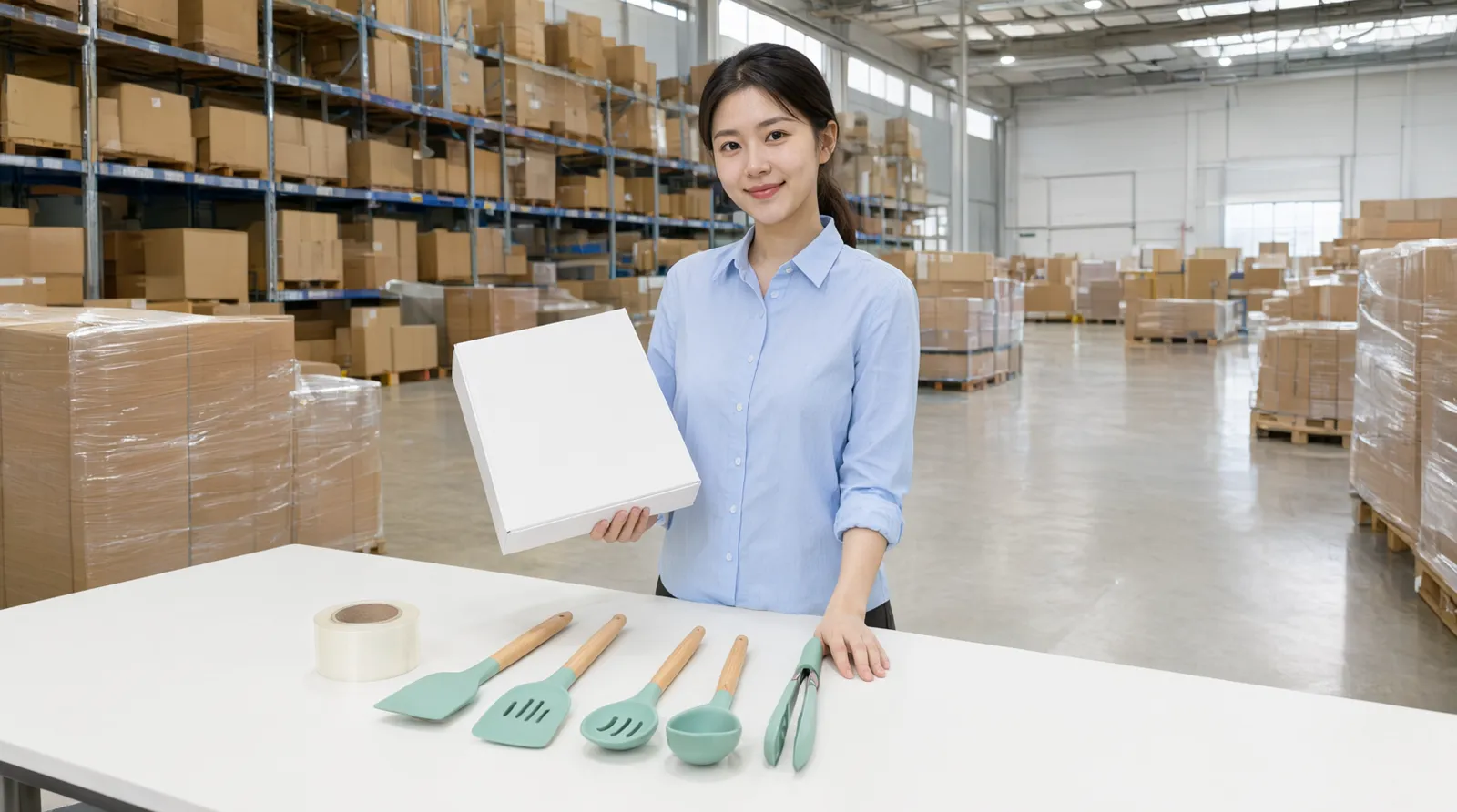
Last month a Shopify client — a kitchen-accessories brand doing roughly $40,000 a month — sent me two quotes for the same silicone utensil set. Unbranded: $2.85 per piece. With her logo debossed into the handle and a full-color retail box: $3.20. Her question was the one I hear in nearly every white label conversation: “Is that extra $0.35 worth it?”
We ordered the branded version, and I’ll tell you why in a moment. But the honest answer is that the extra 35 cents wasn’t the real decision. The real decision was whether she could register the brand, defend the listing, and reorder the exact same product in eight months without the factory quietly changing the material or handing “her” product to the three sellers ranked below her.
I’m Angel, CEO of SinoSourceAgent. I’ve spent more than a decade on the ground in China buying for importers, Amazon FBA sellers, Shopify brands and distributors — including hundreds of white label runs from 500-piece pilots to 40-foot containers. This guide is the version of white label product sourcing I’d walk a client through: what it actually means, what it costs, how to keep ownership, and where it stops being smart.
What White Label Product Sourcing Actually Means
White label product sourcing is the process of buying a factory’s existing, already-tooled product and putting your own brand on it — logo, packaging, colors, sometimes a small physical or material tweak. You are not designing a new product. You are claiming an existing one.
That distinction matters because the industry uses five words loosely. Here’s the honest map:
| Model | Where the design comes from | Who typically owns it | Your brand on it | Typical MOQ | Cost vs. generic |
|---|---|---|---|---|---|
| Generic sourcing | Factory’s stock catalog model | Factory (usually unregistered) | No | 100–1,000 | Baseline |
| White label | Factory’s existing model | Factory (usually unregistered) | Logo, box, colors | 500–3,000 | +5–15% |
| Private label | Factory model + a full brand program | Factory, licensed to you | Deep branding, inserts, colors, sizes | 1,000–5,000 | +10–25% |
| ODM | Factory’s in-house design team | Factory, sometimes licensed exclusively | Yes | 2,000–10,000 | +15–40% |
| OEM | Your design, your tooling | You (if you pay for and register it) | Yes | 3,000–10,000+ | +20–50% |
If you are not sure where white label ends and ODM begins, our OEM vs ODM private label guide walks through the licensing and tooling consequences — it’s the difference between owning a product line and renting one.
The single most important sentence in this article: white label buys you branding, not exclusivity. Unless you negotiate and pay for exclusivity in writing, the same factory can sell the same product to your competitor the same week. The physical product is not your moat. Brand, packaging, content, reviews and repeat purchase behavior are.
Why White Label Is the Right First Move for Most Importers in 2026
Three things changed the calculus in the last two years, and all three push importers toward white label rather than OEM.
1. Capital efficiency beats design purity. Tooling for a new injection mold can run $3,000–$15,000 per part and 20–40 days. In 2026, with landed costs that can shift 10–20 percentage points on a policy announcement, locking that money into tooling before you have proven demand is the expensive kind of brave. White label lets you test three SKUs for the cost of tooling one.
2. Marketplaces reward registered brands now. Amazon Brand Registry, A+ content, Sponsored Brands and the ability to remove hijacked listings all require a registered trademark — which means a branded product, which means white label at minimum. Selling generic in 2026 means competing on price alone against sellers who can run ads and content you can’t.
3. Differentiation has moved off the product. For most categories, buyers can’t tell the difference between two silicone spatulas. They can tell the difference between a brand with a clean retail box, a legible instruction card and consistent stock. White label is the cheapest way to own that layer.
The trade-off, stated plainly: white label is also the easiest path to selling a commodity. If you add a logo and nothing else, you’ve bought a 12-month head start and no moat. The importers who win with white label treat it as step one — brand registration, packaging quality, bundle design, content — not as the whole strategy.
Where White Label Works — and Where It Doesn’t
After enough projects, the pattern is obvious. White label fits categories where the product is already commoditized, the design is legally unremarkable, and the buying decision is driven by brand and presentation.
White label works well for:
- Drinkware, kitchen tools, silicone and stainless accessories
- Pet accessories — leashes, bowls, toys, grooming tools
- Home organization, storage baskets, cleaning tools
- Yoga, fitness and outdoor accessories
- Bags, pouches, travel organizers (nylon and PU constructions)
- Beauty tools (brushes, applicators, accessories — not formulations)
- Stationery, planners, gift items, seasonal decor
- Tools and hardware accessories with no patented mechanism
White label goes badly when:
- The product depends on firmware, apps or electronics integration (you can’t warranty what you don’t control)
- The category carries a heavy regulatory load in your market — cosmetics with claims, supplements, food contact claims you can’t verify, children’s products requiring formal CPC testing
- The differentiating feature is a patented mechanism. White-labeling a utility-patented design is how importers end up funding a recall and a legal letter
- Your brand promise is “the only one of its kind.” White label can never deliver that
If your product idea needs real design work, that’s an OEM conversation, not a white label one — and it should come after you’ve proven demand with a white label test.
The Real Costs of the Branding Layer (With Numbers)
Most buyers compare the wrong two numbers. They see “$2.85 vs $3.20” and evaluate the difference as if it were a purchase cost. It isn’t — it’s a brand-building cost, and it’s usually the cheapest one you’ll ever pay. Here are the line items I see on real white label quotes:
| Cost item | Typical range | Notes |
|---|---|---|
| Logo application — pad print, laser, deboss | $0.05–$0.25 / unit; $80–$400 one-time plate or tooling | Laser and deboss hold up better than sticker labels |
| Retail box or sleeve | $0.12–$0.45 / unit; $150–$600 die-line and print setup | Biggest visual upgrade per dollar |
| Insert card / instructions | $0.04–$0.15 / unit; $30–$120 setup | Also a support-deflection tool |
| Barcode / GTIN | $30 for a single GS1 US barcode, up to ~$250 for a small block | Never accept a resold “cheap” barcode |
| Trademark (USPTO, one class, attorney-assisted) | $350–$1,200 | Required for Amazon Brand Registry |
| Certification testing (per applicable standard) | $300–$2,500 per SKU | Depends on category and market |
| Pre-shipment inspection | $250–$350 per man-day | Non-negotiable on a first run |
| MOQ uplift vs. generic | +10–30% on quantity | You pay for the brand’s order size, not the brand |
Run the client’s numbers: +$0.35 on a $2.85 unit is +12% COGS. On a $39.99 retail price, it’s under 1% of revenue — and it converts the product from “unbranded silicone set, 4.3 stars, no listing protection” into a registered, defensible brand with ad eligibility. That is the trade. When buyers tell me the branding layer is “too expensive,” they are usually comparing it against zero, while ignoring that generic products spend the difference on Amazon PPC to compete.
Where white label does get expensive is not the branding. It’s the 3,000 units you buy of an unproven product because the price break tempted you past your testing discipline.
The 7-Step White Label Process (Realistic Timeline)
This is the sequence we run with clients. Weeks overlap deliberately — branding work runs in parallel with sampling, not after it.
| Step | What happens | Realistic timing |
|---|---|---|
| 1. Shortlist factory models | 3–5 candidate factories, 2–3 similar products each; collect specs, certifications, capacity | Week 0–1 |
| 2. Sample and lock the spec | Order 3–5 samples, test them yourself, choose one model, write the spec sheet | Week 1–3 |
| 3. Brand assets | Trademark search and filing, logo files, packaging artwork, decide box vs. sleeve | Week 2–5 (parallel) |
| 4. Quote the branding layer separately | Ask for product price and branding cost as two lines, not one blended number | Week 3 |
| 5. Golden sample sign-off | Factory produces a fully branded, finished unit; both sides sign, photograph and keep one | Week 5–6 |
| 6. Pilot order + inspection | 500–1,000 units, pre-shipment inspection at AQL 2.5, fix issues while the run is small | Week 6–10 |
| 7. Scale, certify, ship | Confirm second order pricing, complete certification if needed, book freight | Week 10–14 |
Notice that step 4 is a step. Blended quotes are the most common place importers overpay, because a factory that can’t separate product cost from branding cost usually can’t tell you what changes if you drop the box and add a sticker instead.
How to Tell a Factory Is Actually White-Label Ready
“White label? Yes, no problem.” I’ve heard that from factories that had never printed a retail box in their lives. Four questions separate the real ones:
- “Can you send photos of a finished retail box you printed and packed for another client?” A white-label-ready factory has packaging partners and photographic proof — not a promise.
- “What are the plate, die-line and setup charges, and what is the lead time for packaging?” Real answers come in numbers: 7–10 days for printed cartons, 15–20 days if they outsource to a specialist printer.
- “Do you own the mold for this product, or does another factory make the shell?” If the shell comes from a third factory, your white label project now depends on two suppliers’ holiday schedules.
- “If I order 500 branded units first and 3,000 later, will the material and dimensions stay identical?” Get it in writing. White label drift — same product, thinner material, smaller box — is the most common complaint I hear from repeat buyers.
If the factory can answer all four with specifics, you’re talking to a supplier worth piloting with. If they answer with enthusiasm and no numbers, keep looking.
The Branding Layer: What Actually Goes On the Product
The branded product has to satisfy three different masters: your customer, your marketplace, and customs. Get these details right:
- Origin marking. Goods imported into the US must be permanently and conspicuously marked with the country of origin (19 CFR Part 134). “Made in China” on the product or on a permanently affixed label — not just on the box. Never let a factory print a vague “Designed in USA” style origin claim; if a supplier offers to leave origin off, that’s your signal to walk away.
- Barcodes. One GTIN per sellable unit, straight from GS1 — never a resold code. For FBA, Amazon’s FNSKU label goes over your barcode, so keep the printed barcode legible for retail channels.
- The unboxing. A retail box plus one insert card does more for perceived quality than a material upgrade costing three times as much. Our custom packaging from China guide covers die lines, print finishes, box board grades and real unit costs.
- Claims. Put benefits on the box, not regulatory promises. Avoid medical, safety or environmental claims you can’t substantiate in your market.
Compliance and IP: The Two Things That Decide Whether White Label Is Safe
Trademark. File in your selling market before you scale, not after. Search first: a white label product with a logo that clashes with an existing mark in your market gets you a takedown, not a business. A registered word mark is also what unlocks Brand Registry, A+ content and enforcement tools.
Design ownership. Ask directly: does the factory own the design, did they license it, or did they copy it from a competitor’s catalog? The third answer is more common than anyone wants to admit, and it is the fastest way to inherit a design patent dispute in the US or an EU design right claim. If the model looks like a famous brand’s product, assume the risk is real.
Certification. Every white label SKU still needs to comply with the rules of your destination market. In the US that can mean FCC and UL for anything electric, CPSIA testing and a Children’s Product Certificate for kids’ items, FDA food-contact compliance for kitchen products, or California Prop 65 labeling. In the EU, CE marking, GPSR requirements and the doC are on the importer, not the factory. Our product certification guide for importers covers which certificate applies to which product category. Budget testing before you commit to a 3,000-unit order — compliance failures are discovered at the port, not at the sample table.
Quality Control for White Label: The Golden Sample Rule
White label adds inspection points that generic purchasing doesn’t have, because now defects are your brand problem. The discipline is simple:
- The golden sample. After you approve the fully branded unit, both sides sign, date and photograph it, and each keeps one. Every production dispute afterwards is settled against that sample — not against a memory of what you approved in September.
- Pre-production sample. Before the bulk run, get one unit off the actual production line with the actual materials and the actual packaging. This is where “the box covers your logo” and “the barcode doesn’t scan” get caught cheaply.
- Pre-shipment inspection at AQL 2.5 on cartons and quantity, plus a functional check on a sampling of units and a review of label text, spelling and barcode scannability. Branded packaging introduces a whole class of defects — misprinted logo, wrong color, missing insert — that never show up in a generic order.
- Container loading supervision for first orders. It sounds excessive until you’ve seen the photos of how 3,000 boxed units look after a sloppy load.
Our quality control services cover the sample sign-off, in-line checks and pre-shipment inspection we run for white label projects, including the branded-packaging checks most third-party inspectors skip.
MOQs, Pilot Runs and Negotiation
White label MOQs are typically higher than generic MOQs because the factory has to buy packaging and set up a print run: 500–3,000 units per SKU per color is normal, and colored or debossed versions sometimes push the minimum higher.
Five levers that actually move the number:
- One color, one carton. Every extra colorway or size split multiplies the packaging minimum.
- Stock box + printed label for the pilot. A high-quality printed label on a plain white box can look great at 500 units, then upgrade to a printed box at 3,000.
- Pay a small pipeline fee. Offering $150–$400 to cover setup on a small run is often cheaper than buying 2,000 units you don’t need yet.
- Bundle instead of split. One SKU with an accessory often sells better than two single SKUs with separate packaging minimums.
- Commit forward, in writing. A documented second order in 90 days is real leverage on price and priority.
Never let a supplier’s volume discount set your first order size. The discount on 3,000 units is meaningless if the product doesn’t sell; the same money buys a second SKU test, better packaging, or paid traffic.
Six Mistakes That Cost Importers Real Money
- Assuming white label includes exclusivity. It usually doesn’t. Negotiate exclusivity in writing, with a minimum volume and a term — or accept that you’re first, not only.
- Skipping the golden sample. The single most expensive shortcut in this article.
- Letting the factory or its agent register your brand in China. If a third party registers your mark or design there, your leverage disappears. Own your IP portfolio on both sides of the ocean.
- Wrong or missing origin marking. Customs seizures and forced relabeling are avoidable.
- Blending product and branding into one price. You then have no way to compare suppliers or to redesign packaging later without a full renegotiation.
- Buying inventory before you’ve tested demand. A 500-unit pilot that confirms sell-through is worth more than a 3,000-unit “deal” that doesn’t.
The Bottom Line
White label product sourcing is the cheapest ownership you can buy in China: no tooling, no engineering, a 5–15% premium over generic, and a defensible brand on the other side if — and only if — you register the trademark, control the packaging and hold the factory to a signed golden sample.
For most importers starting in 2026, the sequence that works is: white label a proven model, prove sell-through at small volume, register the brand, then invest in packaging and, eventually, OEM tooling once the numbers justify it. That is how a white label product becomes a private label business.
If you want help finding white-label-ready factories, cost out the branding layer properly, or structure an exclusivity deal that means something, our product sourcing team does this every week — and we’ll tell you honestly when a product is better bought generic.
Get a Free Sourcing Quote
Tell us about the product you want to source and our team will get back to you within 24 hours.