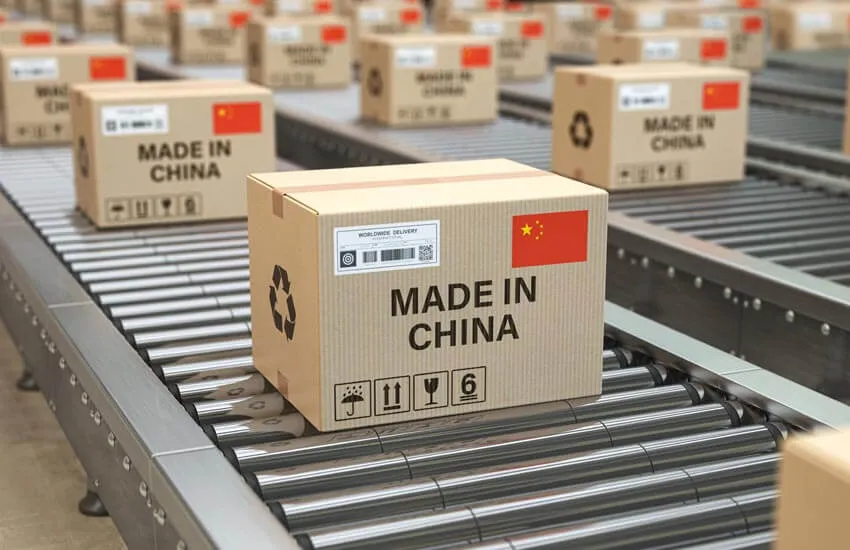
Made in China Products List: 20 Categories That Dominate Global Supply in 2026

Most “made in China products list” pages you’ll find are just lists. They tell you that China makes phones, toys and shoes, and then leave you exactly where you started — with no idea which categories are still worth sourcing there, which ones have quietly become dangerous for a small importer, and which hub city will actually quote you a realistic price.
I’ve spent more than ten years on the ground in China buying for importers, Amazon FBA sellers, Shopify brands and small distributors. In that time I’ve placed thousands of orders across most of the categories below, from 300-piece sock orders to 40-foot containers of furniture. This list is the version I’d hand a client: what China dominates, where it’s made, what the minimum order really is, and what each category costs you in 2026 — after the tariffs, the certification and the freight.
Two things before the list. First, China still accounts for roughly 30% of global manufacturing output — more than the next three largest manufacturing nations combined — and that concentration is why this list is still the fastest route to a competitive product. If you want the geography behind it, our guide to China’s manufacturing regions maps the clusters by province. Second, “China dominates” and “you can source it profitably” are not the same statement. Every category below carries a different tariff exposure, freight density and certification burden, and I’ll flag those honestly as we go.
How to Read This Made in China Products List
Each entry gives you five things you actually need before you send an inquiry:
- What China’s share of global supply looks like — so you know whether you’re buying from the world’s price setter or a secondary producer.
- The hub — the city or district where the supply chain is dense enough to be fast and cheap. Buying outside the hub is the single most common reason importers get bad quotes.
- Realistic MOQ — the number a factory will actually accept in late 2026, not the number printed on a marketplace listing.
- The cost that catches people out — certification, freight density, tooling or breakage.
- 2026 watch-outs — tariffs, compliance or logistics issues specific to that category.
One honest caveat on tariffs: the US tariff stack on Chinese goods was rebuilt this year after the Supreme Court struck down the IEEPA tariffs in February, and categories now land anywhere from the high teens to more than 50% all-in depending on their code. I’ve written the full breakdown in our China import duty guide — treat it as required reading alongside this list, because duty is now often a bigger cost line than the product itself.
Electronics and Powered Products
1. Consumer electronics and phone/computer accessories
China is the world’s largest producer of consumer electronics by a wide margin, and no other country has assembled a comparable supplier base for cables, chargers, hubs, phone cases, stands and audio accessories. Shenzhen and Dongguan hold the densest ecosystem on earth — you can prototype a PCB, a silicone mold and retail packaging within a 45-minute drive.
- Hub: Shenzhen, Dongguan, Huizhou
- Realistic MOQ: 500–3,000 units for accessories; custom enclosures push you higher
- Watch-out: anything with a lithium battery is classified as dangerous goods, which raises freight and rules out the cheapest courier channels. FCC (US), CE-RED (EU) and RoHS testing apply, and you should budget $400–$1,500 per SKU for certification.
2. Small home appliances
Air fryers, blenders, garment steamers, vacuum cleaners, coffee grinders — China builds the majority of the world’s small appliances, concentrated in Shunde (Foshan), Cixi (Ningbo) and Qingdao.
- Realistic MOQ: 1,000–5,000 units; tooling for a custom body runs $8,000–$30,000
- Watch-out: voltage and plug configuration is not a detail. A 220V/Type-C Euro model cannot be sold in the US, and re-plugging units after production is expensive. US sales need UL or ETL listing; the EU needs CE plus WEEE and packaging registration in some markets.
3. LED lighting
Guzhen, in Zhongshan, is known as China’s lighting capital and sits inside a country that produces around 70% of the world’s lighting products. The category is brutally competitive, which is good news for buyers — but the difference between a $1.20 and a $3.50 downlight is almost always the driver and heat management, not the LEDs.
- Realistic MOQ: 500–2,000 units per model
- Watch-out: cheap drivers fail in the field, and returns on installed lighting are far more expensive than the unit price. Insist on driver brand and a 3,000-hour burn-in report; CE, UL and ErP energy labelling apply in the West.
4. Batteries, power banks and home energy storage
China controls roughly 70–80% of global lithium-ion cell production, and Shenzhen, Ningde and Changzhou are the epicenter. This is the fastest-growing category on the list and also the most regulated.
- Realistic MOQ: 1,000–5,000 units for consumer packs; storage systems are quoted per container
- Watch-out: UN38.3 test reports, DG declarations and carrier limits are non-negotiable, and freight for energy storage is heavy and hazmat-flagged. Expect capacity claims to be inflated — always test at your own lab before scaling.
5. Solar panels and clean-tech hardware
China manufactures around 80% of the world’s solar modules, along with the inverters, mounting hardware and batteries that go with them. Module pricing has fallen so far that panel cost is no longer the barrier — logistics, mounting and permits are.
- Realistic MOQ: one container for modules; smaller orders for controllers, cables and mounting kits
- Watch-out: modules are dimension-heavy and easy to damage. Certification (IEC 61215/61730, UL) and country-specific grid approvals matter more than price here.
6. Smart home and IoT devices
Shenzhen has become the default home for connected devices — smart plugs, sensors, cameras, locks and pet feeders — because the supply chain covers sensors, firmware, apps and cloud backends in one city.
- Realistic MOQ: 500–3,000 units; app development is a separate $3,000–$20,000 line item that most buyers forget
- Watch-out: firmware quality and app maintenance decide your reviews. Radio certification (FCC, CE-RED, and local variants) is mandatory, and privacy compliance now applies to anything with a camera.
Home, Furniture and Interiors
7. Furniture
China is still the world’s largest furniture producer and exporter, with roughly a third of global production and about $68 billion of exports in 2025 — even after a 5.9% decline. Foshan’s Shunde district, where Lecong and Longjiang sit side by side, remains the global wholesale epicenter.
- Hub: Foshan (Shunde, Lecong, Longjiang), Haining (upholstery), Chengdu, Zhongshan
- Realistic MOQ: typically one 40HQ container mixed across models; custom upholstery needs a 30–50 piece minimum per fabric
- Watch-out: furniture now attracts Section 232 tariffs on upholstered goods and cabinets in the US, and cubic volume means a small unit-cost error becomes a large container-cost error. Our furniture sourcing guide walks through hub-by-hub pricing.
8. Home textiles and bedding
Nantong (Haimen) and Shaoxing handle the bulk of China’s bedding, towels, curtains and cushions, with weaving, dyeing, printing and finishing often within a few kilometres of each other.
- Realistic MOQ: 500–2,000 sets per design; custom prints start around 1,000 metres of fabric
- Watch-out: OEKO-TEX and REACH compliance are becoming standard buyer requirements in the EU, and shrinkage plus color-fastness claims need to be tested — mattress and bedding returns are costly.
9. Kitchenware and stainless steel goods
Jieyang and Yangjiang in Guangdong supply much of the world’s stainless steel cookware, cutlery and thermos products; Chaozhou is the largest ceramics production base on the planet.
- Realistic MOQ: 1,000–3,000 units; custom handles or logos usually $1,000–$5,000 in tooling
- Watch-out: food-contact compliance (FDA, LFGB, Prop 65) requires actual test reports, not supplier assurances, and stainless steel grades genuinely vary — 304 and “304” are not always the same thing.
10. Ceramics, glass and tableware
Chaozhou for daily-use ceramics, Zibo for bone china, and Shanxi and Hebei for glassware. The category is price-transparent and ruthless.
- Realistic MOQ: 1,000+ units per shape; decorated items take 30–45 days plus firing risk
- Watch-out: breakage in transit is a real cost line. Packaging quality — molded pulp, dividers, drop testing — decides whether your margin survives shipping.
11. Storage, cleaning and housewares
Taizhou, Yiwu and Jinhua make the unglamorous products that sell steadily: storage boxes, cleaning tools, laundry items, bathroom accessories and organizers.
- Realistic MOQ: 1,000–5,000 units
- Watch-out: unit prices are low, so freight and packaging efficiency decide profitability. Consolidating several housewares SKUs into one container is usually the difference between a 20% and a 45% gross margin.
Apparel and Soft Goods
12. Apparel and knitwear
Guangzhou (Zhongda fabric market), Shaoxing (Keqiao) and Dongguan form the most complete apparel supply chain in the world, from yarn and fabric to cut-and-sew, washing and finishing.
- Realistic MOQ: 300–500 pieces per style per color; premium fabrics raise it to 1,000+
- Watch-out: children’s apparel requires CPC testing in the US and EN 14682 cords rules in the EU, and fiber-content claims are audited. Sample rounds take 2–3 weeks — build them into your launch plan.
13. Underwear, socks and hosiery
Zhuji’s Datang district produces roughly a third of the world’s socks, and Yiwu supplies seamless underwear, shapewear and basic knitwear at volumes almost nobody else can match.
- Realistic MOQ: 1,000–5,000 pairs or pieces per design
- Watch-out: this is the most price-sensitive category on the list. A 3-cent difference per pair is material, and cheap yarn shows up as pilling and holes after five washes.
14. Footwear
Jinjiang (Quanzhou), Dongguan and Wenzhou cover athletic, casual, leather and injection-molded footwear for almost every market in the world.
- Realistic MOQ: 300–1,200 pairs per style per color
- Watch-out: sizing accuracy and last consistency decide your return rate; customs scrutiny on undervalued footwear is high in both the US and EU.
15. Bags, luggage and leather goods
Guangzhou’s Huadu and Baiyun districts, plus Xiamen, supply backpacks, totes, travel bags and leather goods — often in the same buildings that supply the global brand supply chains.
- Realistic MOQ: 300–1,000 units; custom hardware and linings add tooling and lead time
- Watch-out: REACH and Prop 65 restrictions on phthalates and azo dyes apply, and zipper quality is where cheap bags fail first. Specify brand-name zippers if you plan to sell above $40.
Toys, Sports and Lifestyle
16. Toys and games
China makes roughly 70% of the world’s toys, and about 80% of the toys sold in the US. Chenghai district in Shantou hosts more than 10,000 toy companies with 90% of components sourced locally; Yiwu produces roughly one in four toys sold worldwide.
- Hub: Chenghai (Shantou), Yiwu, Yangzhou (plush)
- Realistic MOQ: 1,000–3,000 units; tooling for injection-molded toys starts around $3,000–$8,000 per mold
- Watch-out: testing is the category’s real cost. EN 71, ASTM F963 and CPC certification can run $500–$2,000 per SKU, and Q4 is unforgiving — a delay in October becomes a missed Christmas.
17. Sports and outdoor equipment
Dezhou for fitness equipment, Ningbo and Xiamen for outdoor gear, and the Yangtze Delta generally for camping, yoga and training accessories.
- Realistic MOQ: 300–1,000 units
- Watch-out: these products are large and heavy, so freight can exceed product cost on bulky items like benches and racks. Design for flat-packing and reduce volume wherever possible.
18. Pet supplies
Pingyang (Wenzhou) and Nantong lead a category that has grown faster than almost any other in the last five years: pet beds, feeders, toys, harnesses and grooming tools.
- Realistic MOQ: 500–3,000 units
- Watch-out: anything that touches food or the animal’s mouth faces stricter testing, and chew-toy durability is the number one review driver. Pick your material grade deliberately.
Industrial and Vehicle Categories
19. Auto parts, motorcycle and e-bike components
Ruian and Taizhou (Zhejiang) hold one of the densest auto-parts clusters in the world, while Chongqing, Wuxi and Tianjin cover motorcycle and e-bike components and complete vehicles.
- Realistic MOQ: 100–1,000 units for aftermarket parts; OEM programs require IATF 16949 and years of qualification
- Watch-out: aftermarket parts must be sold as compatible, not branded — trademark enforcement is aggressive. Safety-critical items (brakes, lighting) need ECE or DOT approval for legal sale.
20. Tools, hardware and DIY
Yongkang (the “hardware capital”), Jinhua and Linyi produce hand tools, power tool accessories, fasteners, locks and garden tools at scales that set global prices.
- Realistic MOQ: 500–2,000 units; custom blow-molded cases and sets add tooling
- Watch-out: power tools with lithium batteries carry DG shipping restrictions, and steel-content products can attract Section 232 metal tariffs in the US. Hardness and torque claims should be verified by an independent lab, not by the factory’s own certificate.
Categories Worth Watching (Not Quite Top 20)
Stationery and packaging (Ningbo, Wenzhou), cosmetics and beauty devices (Guangzhou’s Baiyun “beauty valley”), medical and wellness devices (Shenzhen, Suzhou), musical instruments (Guangdong), and party plus seasonal goods (Yiwu) all sit just outside this list — smaller in global share, but with fast growth and low MOQs that suit new brands.
What Changed in 2026 (and Why It Matters to This List)
Three shifts changed the economics of nearly every category above this year:
- The tariff stack was rebuilt. The Supreme Court struck down the IEEPA tariffs in February 2026, a Section 122 surcharge applied until late July, and new Section 301 forced-labour duties of 10–12.5% took over from 24 July. Two similar-looking products can now face materially different duty, which makes HS classification a sourcing decision, not a paperwork detail.
- Freight got expensive again. After the Hormuz crisis closed the Strait in late February, ocean spot rates into the US West Coast rose more than 340% versus pre-crisis levels and were still around $8,300 per 40-foot container on 1 October. Heavier and bulkier categories — furniture, fitness equipment, solar hardware — felt this hardest.
- Duty-free small parcels are gone. The US de minimis exemption for China-origin goods is closed, and the EU abolished its €150 threshold on 1 July 2026 while adding a handling fee and product identifiers from 1 November. Low-value categories like phone accessories and stationery no longer enjoy a paperwork advantage.
None of this changed which country makes these products. It changed which categories are still easy to import profitably as a small buyer — and that’s the filter worth applying to any made in China products list you read.
The Three Filters I Use Before Recommending a Category
Tariff and compliance exposure. A category with a 45% all-in duty rate and mandatory testing needs a much higher gross margin than one at 15% with no certification. Model the duty before you fall in love with the product.
Freight density. Value per cubic metre decides more margin than unit price. A container of housewares and a container of sofas can carry the same freight bill with wildly different revenue.
Supply chain depth. The deeper the cluster (furniture in Foshan, toys in Chenghai, appliances in Cixi), the faster you can iterate, the smaller your MOQ flexibility risk, and the more suppliers compete for your order.
If you want to see the categories we actively buy for clients — and the hubs we work in — our product sourcing service page covers the process end to end, from RFQ to factory audit to the container leaving the port.
The Bottom Line
China’s dominance in the categories above is not a talking point; it’s a supplier base you can use today. The buyers who win in 2026 are not the ones chasing the newest product trend — they’re the ones who pick a category they understand, source it in the right hub, price the duty and freight honestly, and refuse to skip testing.
If you’re evaluating a category and want a straight answer on whether it’s worth importing right now — including the real landed cost with this year’s tariff and freight numbers — talk to us. Ten years of buying in China is worth an hour of your time.
Get a Free Sourcing Quote
Tell us about the product you want to source and our team will get back to you within 24 hours.