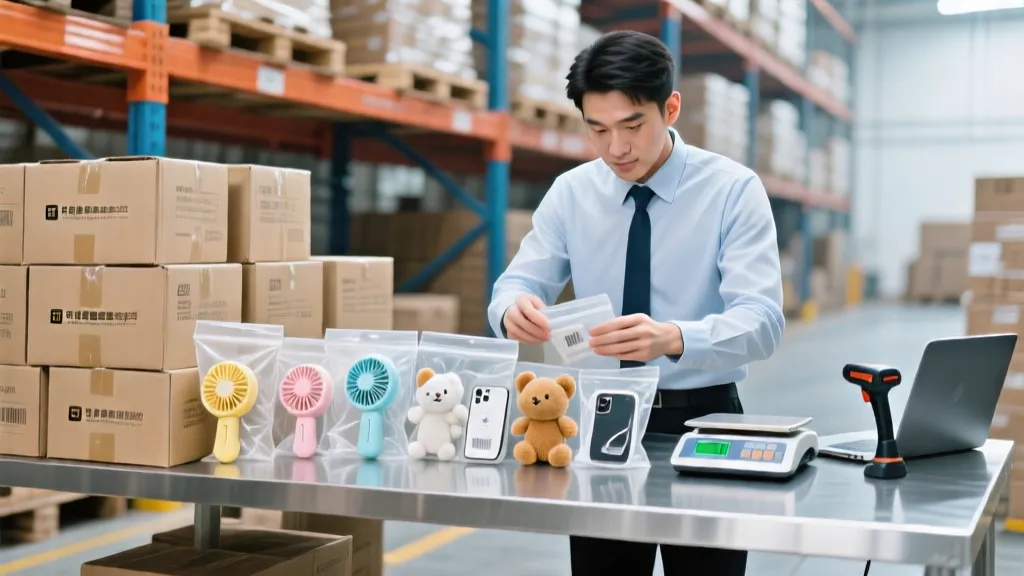
1688 Dropshipping in 2026: Trending Products & How to Source Them from China

A Shopify seller sent me a screen recording in July: she had installed a “1688 dropshipping” Chrome extension, pasted in thirty product links, and watched every one of them fail — wrong currency, no export invoice, no way to pay, and a shipping quote that assumed a Chinese domestic address. She had spent eleven hours on it.
Here is the part the extension listings never tell you: 1688 is a domestic Chinese wholesale platform. It was not built for foreign buyers, and no browser plug-in changes that. The extension can mirror a page into English. It cannot give you a Chinese business license, an RMB payment rail, a domestic freight forwarder, an export declaration, or a legal path for your parcel to clear customs with its declared value intact.
I’m Angel, CEO of SinoSourceAgent. My team has spent more than ten years buying out of Guangdong, Zhejiang, Fujian and Hebei for importers, Amazon FBA sellers and DTC brands — and since 2024, a growing share of that work is exactly this: overseas sellers who want 1688’s domestic prices without a Chinese ID card. This is the honest version of how that works in 2026, what it costs, what’s selling, and where people lose money.
Why Dropshippers Went Looking for 1688 in the First Place
The logic is sound. The same factory-made item usually appears on three platforms at three price levels:
| Platform | Who sells | Typical unit price | Buyer needs | Export-ready? |
|---|---|---|---|---|
| AliExpress | Domestic retail resellers | 100% (baseline) | Nothing | Yes, but slow and dutiable |
| Alibaba.com | Factories and trading companies | 70–85% | Business account, MOQ | Yes |
| 1688.com | Domestic factories and wholesalers | 35–60% | Chinese payment, domestic address, agent | No — you need help |
| Industrial clusters / wholesale markets | Factories, market stalls | 30–55% | Physical presence, Chinese | Partly |
So the arbitrage is real: a product listed at $8.99 on AliExpress is frequently ¥12–20 (roughly $1.70–2.80) on 1688 in quantities of 20–100 pieces. The catch is everything between “I found it on 1688” and “my customer in Ohio has it.”
The Three Models Called “1688 Dropshipping”
Almost everyone who searches this term means one of three very different businesses. The costs and failure modes are not similar.
Model 1: Agent-fulfilled parcel dropshipping. You run a Shopify or TikTok Shop storefront; you never hold inventory. When an order comes in, you (or an automation) place the order with a Chinese agent, who buys from 1688, consolidates it with other orders, and ships it to your customer. This is the closest thing to classic dropshipping and it is the model that got hit hardest by the end of de minimis: every commercial parcel is now dutiable, and in several markets the small-parcel channel has become both slower and more expensive than it was in 2023. Realistic landing cost for a 300 g product to the US in 2026: $4.50–7.00 all-in, with 7–15 days transit through consolidated lanes. If you sell under $20, run the numbers before you commit.
Model 2: Agent-bought bulk, self-fulfilled (the model that works). Your agent buys 200–2,000 units on 1688, inspects them, repacks them retail-ready, and ships one consolidated air or sea shipment to your own 3PL. You then fulfill domestically — 2-day delivery, domestic returns, no per-parcel duty chaos. This isn’t really “dropshipping” any more, it’s light import, and it is what most of my profitable clients migrated to between 2024 and 2026. If you want the fuller comparison of these structures, our dropshipping sourcing agent guide walks through the structural options.
Model 3: Hybrid — test by parcel, scale by bulk. You test demand with 10–30 sample units shipped parcel by parcel, then place a 500-unit 1688 order through an agent once a SKU proves itself. This is the model I recommend to new sellers, because it spends the least money on being wrong. The parcel channel is a test lab; the consolidated shipment is the business.
What all three have in common: somebody in China has to buy, consolidate and export on your behalf. That’s the layer the plug-ins skip. It’s also the layer our product sourcing service exists to be.
What’s Actually Trending on 1688 in 2026
I’m not going to hand you a “top 10 winning products” list, because those lists are how categories get saturated. Instead, here are the clusters where I see overseas dropshippers and small brands placing real 1688 orders this year, with the price ranges we’re actually transacting at:
| Category cluster | Typical 1688 unit cost | Why it’s moving | Main risk |
|---|---|---|---|
| Portable/home gadgets (handheld fans, humidifiers, cordless vacuums, mini projectors) | ¥18–90 ($2.50–12.50) | Low shipping weight, visual demos convert on TikTok | Lithium batteries = freight surcharge |
| Pet accessories (cooling mats, slow-feed bowls, car seats, plush toys) | ¥6–45 ($0.85–6.30) | Pet spend is defensive in a soft economy; repeat buyers | Plush = testing and import rules in some markets |
| Phone and desk accessories (MagSafe wallets, stands, cable organizers, mini tripods) | ¥4–35 ($0.55–4.90) | Tiny volumetric weight, high perceived value | Near-zero differentiation, price wars |
| Home organization and kitchen singles (sink racks, spice organizers, freezer boxes) | ¥5–40 ($0.70–5.60) | Content-friendly “before/after” videos | Bulky relative to value = freight math |
| Outdoor and camping smalls (folding stools, lanterns, picnic mats) | ¥15–70 ($2.10–9.80) | Seasonal spikes, high AOV | Seasonality, size-driven freight |
| Jewelry and accessories (stainless steel, resin, custom charms) | ¥2–25 ($0.30–3.50) | 80–120 g parcels, personalize easily | Nickel/reach compliance, trademark themes |
| Anime/character-adjacent merch (not licensed characters — see the IP warning below) | ¥3–30 ($0.40–4.20) | Fan-driven demand, impulse buying | Copyright. This one is a trap. |
Trended SKUs move fast. A product that spikes on TikTok Shop in July is usually a saturated ad market by October, and by the time a “trending products” article is ranking, the 1688 factories behind it have already switched their molds to next season’s item. The durable approach is to watch a handful of categories, not to chase the object of the month.
The 1688 Sourcing Workflow I Actually Use
Step 1: Find the product with image search, not with a plug-in
On 1688, search by image is the single most useful function for a foreign buyer. Take the photo from the AliExpress or Amazon listing you’re competing with, drop it into 1688’s camera search, and you’ll usually surface the original factory or its trading arm. Repeat with two or three near-identical listings to see whether everyone is selling the same source product.
Step 2: Read the store like an auditor
Three signals decide whether a 1688 store is a factory or a middleman jumping on trends:
- 回头率 (repeat customer rate) — above about 20% suggests a real trade relationship, not one-off retail.
- SKU coherence — twelve SKUs in one product family means a workshop; 400 SKUs across unrelated categories means a reseller.
- 厂房/实拍 photos — workshop photos with the same bench, same machines and same hands across listings are the cheapest authenticity signal you’ll get.
Never trust the 已售 (units sold) counter on its own. It is trivially inflated by the same tools that sell the plug-ins.
Step 3: Qualify the supplier in writing
Before money moves, I want three things from the seller: the business license, the name on the bank account, and a live video walkthrough of the production line. The legal name on the license and the account must match, and if the supplier refuses a five-minute video call in 2026, that is your answer. On 1688 specifically, also confirm they can issue a VAT invoice (增值税发票) — with it, export rebates and legit export declarations become possible; without it, your goods are leaving on a gray channel that will eventually bite you at customs.
Step 4: Order paid samples — from two suppliers
Not one. Two. Comparing finish, dimensional accuracy and packaging side by side is how you catch the factory that is quietly using a lighter magnet, a cheaper battery cell or thinner ABS. Our complete guide to getting samples covers sample stages and what each should cost; the short version is that a $60 sample that saves you from a $4,000 mistake is the best trade in importing.
Step 5: Write the spec before you negotiate price
A sample is not a specification. The purchase order should state dimensions with tolerances, material grade, color references, packaging construction, units per carton, carton weight and dimensions, defect thresholds, and the remedy if thresholds are exceeded. If you’re ordering 500 units with your own branding, this is also the moment where your packaging decision gets made — before tooling, not after.
Step 6: Inspect before it ships, even on small orders
Statistical pre-shipment inspection at AQL 2.5 major / 4.0 minor costs about $250–400 per man-day in the Pearl River Delta. On a 600-unit order that’s roughly 5–8% of goods value, and it is the only point in the process where defects are cheap to fix. After the container leaves, a 6% defect rate stops being a supplier problem and becomes your review score. This is the step our quality control team runs as standard.
Step 7: Consolidate, then decide the lane
Domestic 1688 sellers ship to a Chinese address in 2–4 days for a few RMB. Your agent receives at one warehouse, checks quantity and condition, merges multiple suppliers into one export shipment, and then you choose the lane: consolidated air (7–12 days), express air (3–6 days, 2–4× the cost), sea LCL (28–40 days), or a matraced DDP truck/rail line for smaller test volumes. For anything under about 200 kg, consolidated air is usually the right answer; above 500 kg, sea freight wins unless your inventory turn is faster than your transit time.
The Real Numbers: A 300 g Gadget, Two Ways
The same product — a ¥22 handheld fan set with retail packaging — sourced two ways into the US in 2026:
| Cost line | Parcel route (per unit) | Bulk route (per unit, 600 units) |
|---|---|---|
| 1688 goods cost | ¥22 = $3.10 | ¥20 = $2.80 |
| Agent commission (7%) | $0.22 | $0.20 |
| Domestic consolidation | $0.10 | $0.06 |
| Export freight (consolidated air) | $2.60 | $1.45 |
| Duty + tariff stack (≈32% of goods value) | $1.03 | $0.93 |
| Retail-ready repack and insert | $0.30 | $0.22 |
| Landed cost | $7.35 | $5.66 |
Sell at $24.99 and the parcel route leaves you $17.64 before platform fees, ads and returns; the bulk route leaves $19.33 plus domestic 2-day fulfillment you control. On 600 units a year that gap is about $1,000 — and it grows fast with volume. The duty line is the part most sellers still get wrong; our China import duty guide has the current rates and the tariff stack by category.
The Four Traps That Cost People Real Money
1. Copyright and trademark. This is the big one. 1688 is full of products that are perfectly legal to manufacture in China and illegal to sell in your market: character designs, sports team marks, “inspired by” luxury cosmetics, and branded-logo phone cases. Platform takedowns, account suspensions and customs seizures all start here. If the design isn’t yours and isn’t licensed, don’t ship it, no matter how well it’s selling.
2. Batteries, liquids and magnets. Lithium cells move your goods into dangerous-goods handling with a different freight channel, a surcharge of roughly $2–5 per kg on air, and stricter documentation. Some carriers won’t take single-cell products by consolidated air at all.
3. Under-declared parcels. A cheap DDP line that offers to declare your $3.10 goods as a $1 “sample” is transferring a customs liability onto your business name. Penalties, seizure and importer-of-record problems land on you, not on the forwarder, and they can outlast the margin you saved by several years of trading.
4. Accepting a Chinese domestic “shipping to your customer” promise. Some 1688 sellers will claim they can ship direct to your overseas customer. What they can actually do is hand it to a consolidator who reships it — usually with the same declared-value problems and no tracking you can defend to a customer.
How to Pick the Right 1688 Agent
An agent is the entire difference between this working and not. Six things I’d insist on if I were hiring one:
- A legal entity you can verify — business license, registered name, and a bank account in the same name.
- Named human beings — a specific account manager, not a rotating chat queue.
- Transparent landed-cost quotes — goods, commission, freight, duty and service fees broken out per line.
- Inspection capability in-house or named — not “we’ll ask the factory to check.”
- Written scope — what’s included, what costs extra, how disputes are resolved, and how you exit.
- At least two references you chose yourself — ask for three clients, then contact two of them without telling the agent which two.
Two hundred dollars of diligence on the agent beats two thousand dollars of diligence on the product, every time.
The Honest Bottom Line
1688 dropshipping in 2026 is not a plug-in, a course, or a passive side hustle. It is a small import business with a marketplace storefront on top — and the sellers who treat it that way are making real, defensible margins, because the parcel-arbitrage crowd quit when de minimis ended and left the field less crowded.
The three rules I’d hand a beginner:
- Verify the product isn’t infringing before you look at the margin. Copyright problems don’t show up in your supplier spreadsheet until they show up in your account suspension.
- Buy 500 units instead of 50 whenever you can afford the test. Per-unit duty, freight and repacking costs collapse at volume, and in 2026 the per-parcel channel is a testing tool, not a business model.
- Never let the plug-in be your supply chain. The software is a viewer; the operation is people, paperwork and price. Buy the operation.
If you want a second opinion on a 1688 link before you commit money to it, send it over. I’ll tell you what it truly costs landed, whether the supplier looks like a factory or a reseller, and — when the honest answer is that the product can’t survive the duty stack — that it shouldn’t be shipped at all.
Get a Free Sourcing Quote
Tell us about the product you want to source and our team will get back to you within 24 hours.